KHMER AND THAI BODYWORK
Khmer Massage vs Thai Massage: What’s the Difference?
Thai massage is familiar to many travellers in Southeast Asia. Khmer massage can be less familiar, and because Cambodia and Thailand are neighbours, it is easy to assume that the two names describe more or less the same treatment.
They do not.
There are similarities. Both traditions can involve pressure, hands-on bodywork and ways of working along lines in the body. But they belong to different cultural traditions, use their own vocabulary and can feel quite different in practice.
Practitioners, techniques and establishments vary. The useful comparison is therefore not a rigid list of rules, but the differences you are most likely to notice during a session.
TWO DISTINCT TRADITIONS
Khmer massage and Thai massage: are they the same?
No. Khmer massage is a Cambodian bodywork tradition, while Nuad Thai belongs to Thailand’s traditional massage culture.
They do, however, share some characteristics that make the comparison understandable. Both can use sustained pressure rather than relying only on light strokes. Both may involve work along lines or particular points in the body. And in both traditions, the way a session feels depends considerably on the practitioner.
One of the clearest practical differences is the role of assisted movement and stretching. These are well documented in many forms of traditional Thai massage. They can also appear in Khmer massage, but they are not the central feature of the Khmer practice described at Sra Thnam.
CAMBODIAN BODYWORK
What is Khmer massage?
Traditional Khmer massage is a Cambodian form of bodywork based largely on touch, pressure and the practitioner’s ability to feel areas or lines that seem tense or resistant.
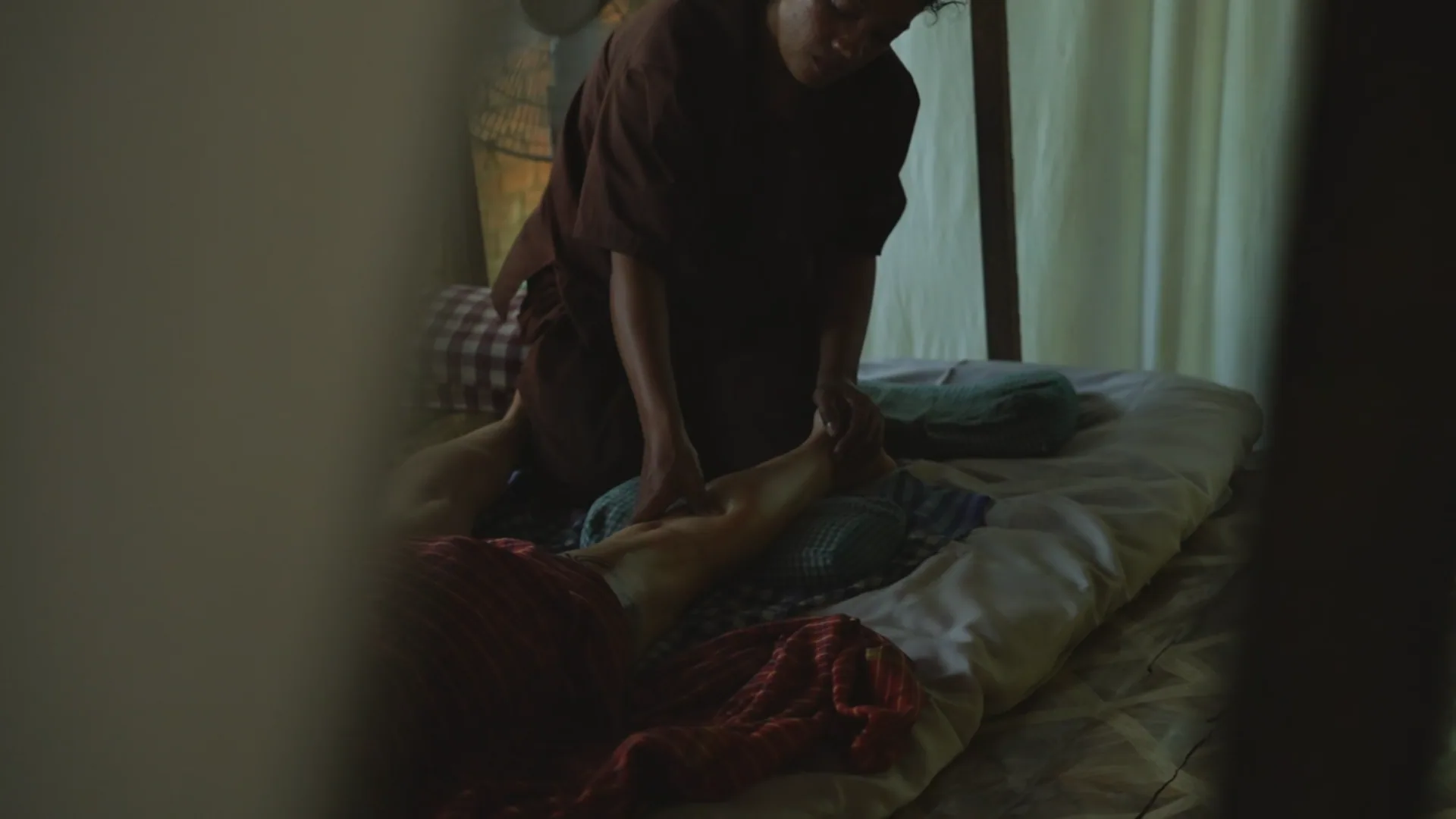
At Sra Thnam, one expression used for this work is jap sosay. The practitioner feels for the sosay, then follows and works those lines or resistant areas using pressure. Hands, fingers, thumbs and elbows may be used depending on the part of the body and the type of work required.
This should not be understood as one standardised sequence followed throughout Cambodia. Pressure, techniques, the use of oil and the amount of stretching can vary between practitioners.
We explain the tradition and the meaning of jap sosay in more detail in our guide to traditional Khmer massage.
THAI BODYWORK TRADITION
What is Thai massage?
Traditional Thai massage is generally known as Nuad Thai.
UNESCO inscribed Nuad Thai on the Representative List of the Intangible Cultural Heritage of Humanity in 2019. It describes the practice as part of Thailand’s traditional healthcare culture and as a form of manual body manipulation associated with sen, lines understood within that traditional system to run through the body.
Pressure is an important part of Nuad Thai. Practitioners may use their hands, elbows, knees or feet, depending on the form being practised.
Many forms also place a noticeable emphasis on assisted movement. The practitioner may guide the person’s body through bends, rotations or passive stretches rather than having them perform the movements themselves. Traditional sessions are also commonly associated with loose clothing rather than massage directly on oiled skin.
But Thai massage is not completely uniform either. Different forms place different emphasis on pressure and stretching. Published descriptions of some court-type Thai massage protocols, for example, involve thumb and hand pressing without traction or stretching. Other documented forms of Traditional Thai Massage include passive stretching, and oil-based variants such as Thai oil or aroma massage also exist.
KEY DIFFERENCES
Khmer massage vs Thai massage: the main differences
Pressure and how the body is worked
Pressure is not a useful way to separate the two traditions by itself.
Traditional Thai massage can involve substantial pressure. Khmer massage can too. Both may use more than the hands alone.
What differs is how that pressure is organised within the particular tradition and, ultimately, how the individual practitioner works.
In the Khmer practice described at Sra Thnam, the practitioner explores the body for sosay and areas that feel hard, dense or resistant, then spends more attention there. Pressure may be sustained or repeated and adjusted according to the area and the person’s response.
Nuad Thai has its own traditional framework around sen. Thai sources describe practitioners combining pressure and bodily manipulation within that system.
The words sosay and sen may appear superficially similar when translated into English as lines, but they belong to different traditions. It would be misleading to assume that they describe exactly the same thing.
Stretching and assisted movement
This is probably the difference a traveller familiar with Thai massage is most likely to notice.
Assisted stretching and guided movement have a well-established place in many forms of Nuad Thai. The practitioner may position the legs, arms or torso and take the body through passive movements while the person receiving the massage remains relaxed.
Stretching can also appear in Khmer massage, but it is not necessarily the organising principle of the session.
At Sra Thnam, the emphasis is more strongly on feeling the body, following resistant lines and working them through focused pressure. Movement may be used when appropriate, but the massage is not built around moving the person through a long series of stretches.
That is a difference in emphasis, not an absolute rule about every Khmer or Thai practitioner.
Clothing, oil and the format of the session
This distinction is less clear-cut than many simple online comparisons suggest.
Traditional Nuad Thai is commonly performed while the person wears loose clothing. But oil-based Thai massage variants also exist.
Khmer massage also varies. Some practitioners work through clothing without oil. Others work directly on the skin and may use oils, balms or local preparations.
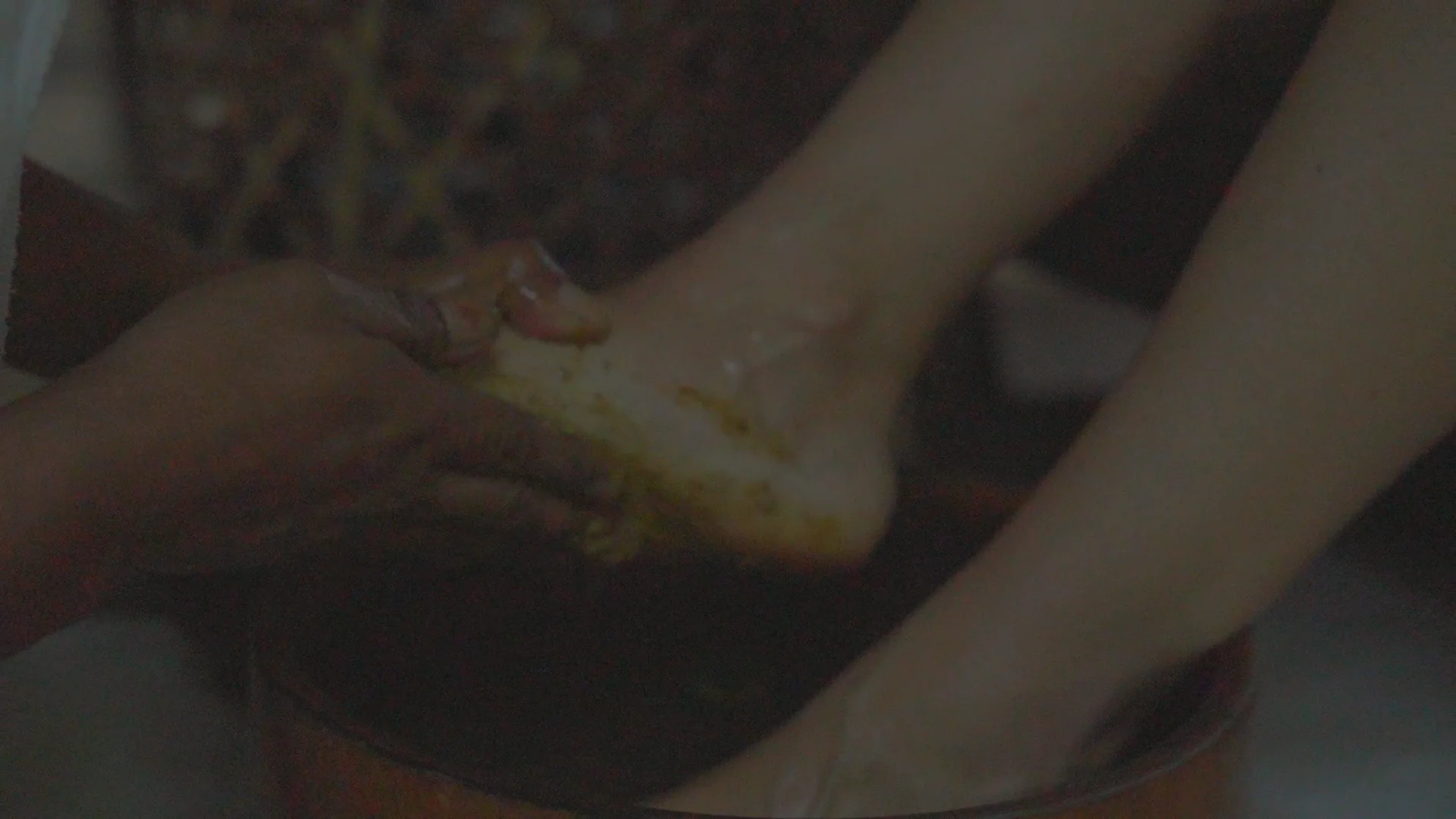
At Sra Thnam, a herbal oil prepared in-house is used during the bodywork.
So Thai massage = no oil and Khmer massage = oil would be a false distinction. The actual treatment format depends on the practitioner and establishment.
| Khmer massage | Traditional Thai massage | |
|---|---|---|
| Pressure | Important in many practices; approach varies by practitioner | Important and well documented within Nuad Thai |
| Assisted stretching | May be used, but not necessarily central | Commonly prominent in many forms, though not universal |
| Clothing / oil | Can vary considerably | Commonly performed in loose clothing, but oil-based variants exist |
| Traditional line concepts | Sosay in the practice described by Sra Thnam | Sen within Thai traditional practice |
The table describes tendencies, not rules that every practitioner follows.
SRA THNAM APPROACH
What does a Khmer massage feel like at Sra Thnam?
Sra Thnam represents one particular way of practising Khmer massage. It should not be taken as a definition of every Khmer massage in Cambodia.
The session starts with the practitioner exploring how different parts of the body feel rather than simply applying the same sequence and pressure everywhere.
Some areas may feel relatively soft. Others may feel hard, sensitive or resistant. The practitioner follows these differences and works more precisely where attention seems necessary.
Pressure can be strong. Fingers, hands and elbows may be used, and a small wooden tool can sometimes be used for very specific points. But stronger pressure is not automatically considered better. The work is adjusted according to the area and how the person responds.
Sra Thnam also uses its own herbal oil during the massage.
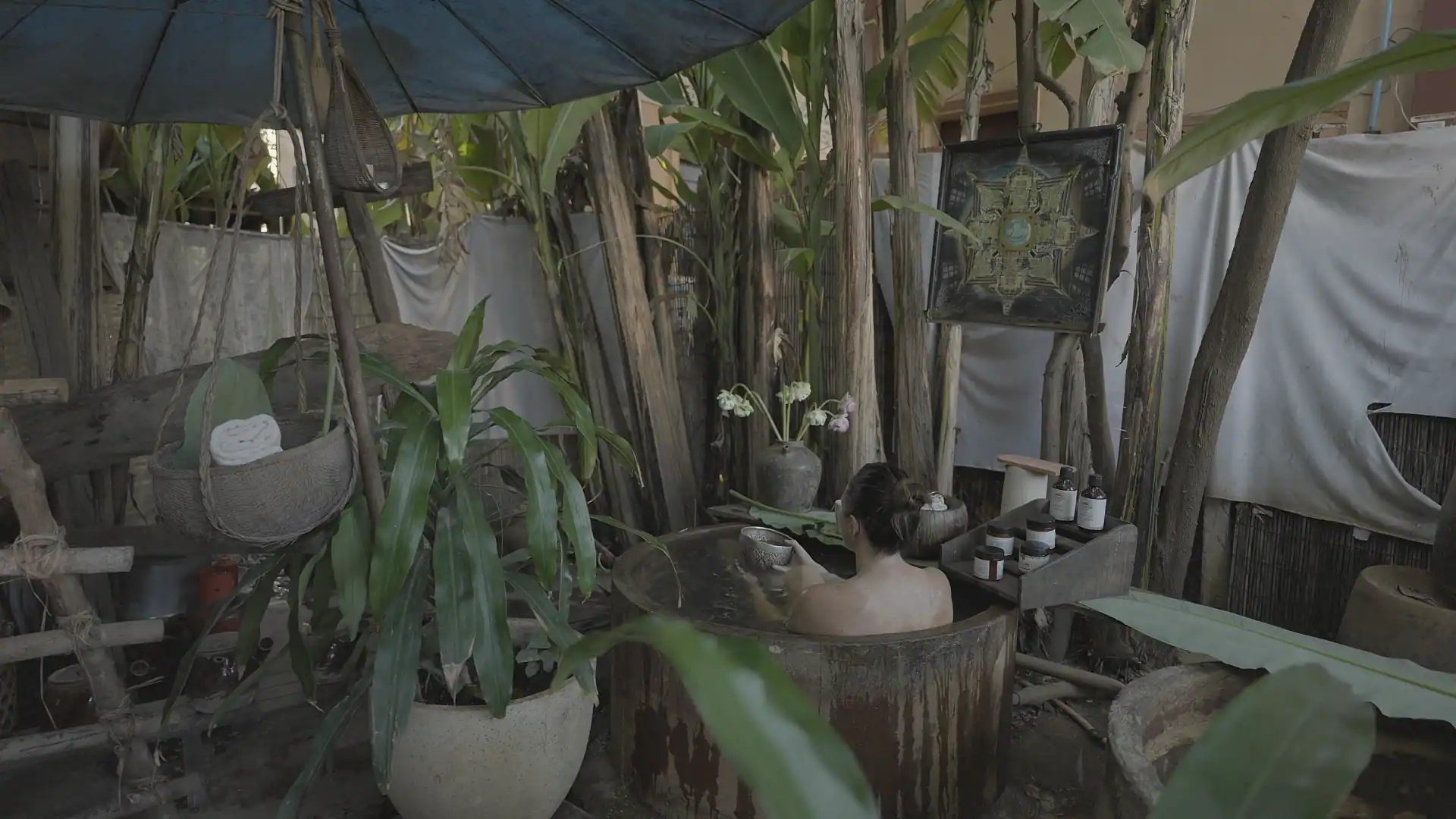
After the bodywork, the Sra Thnam process continues with herbal steam and an infused herbal bath. These stages belong to Sra Thnam’s own approach. They should not be understood as compulsory parts of traditional Khmer massage generally.
That distinction matters: what makes a particular Khmer massage session different may come partly from the wider tradition and partly from the individual practitioner’s own way of working.
CHOOSING THE EXPERIENCE
Which experience might suit what you are looking for?
There is no useful reason to declare Khmer massage or Thai massage the better choice.
If what attracts you to traditional Thai massage is the experience of being moved through assisted stretches and different body positions, that may remain an important part of what you are looking for.
If you are in Cambodia and want to explore a Cambodian bodywork tradition, Khmer massage offers a different reference point. At Sra Thnam specifically, the focus is on pressure, following resistant areas and adapting the work according to what the practitioner feels.
Pressure preference matters too. Neither label tells you exactly how intense an individual session will be, so it is worth asking whether the practitioner can adapt the pressure before you begin.
The establishment matters almost as much as the name of the massage. Two Khmer massage practitioners may work differently from one another, just as two Thai massage sessions may not be identical.
The label tells you the tradition. It does not tell you every detail of the experience.
IN SIEM REAP
Trying traditional Khmer massage in Siem Reap
If you are in Cambodia and want to experience the Sra Thnam approach for yourself, you can read about the full traditional Khmer massage experience in Siem Reap, including how the session is structured and what to expect.
It is a specific Sra Thnam interpretation of Khmer bodywork rather than an attempt to represent every Cambodian practitioner.